
How to Make Puppy Gruel and Mush
- Jun 7
- 5 min read
If you're fostering or raising young puppies between the ages of 3 and 7 weeks, you've probably heard the term "puppy gruel" and maybe felt a little intimidated by it. Don't be! Puppy gruel is simply a blended mixture of kibble, wet food, and liquid that acts as the crucial bridge between a mother's milk (or bottle feeding) and solid food. It's messy, it's a little smelly, and puppies absolutely love it.
This step-by-step guide will walk you through exactly how to make puppy gruel and puppy mush using a blender, with photos to show you each stage of the process.

What You'll Need
Dry puppy kibble (small-breed kibble works best for young pups)
Canned wet dog food (we used Pedigree Meatloaf with Real Beef — a 630g can)
Warm water (or puppy milk replacer for very young pups)
A blender
A large Ziploc bag or bowl for soaking
A storage container with a lid for the finished gruel
Step 1: Add Kibble to Your Blender Cup
Start by pouring a generous amount of dry puppy kibble into your blender cup. You don't need to measure precisely — aim for roughly one to two cups, depending on how many puppies you're feeding and how much gruel you want to make. The kibble will reduce significantly once blended, so don't be shy with it.

In the photo above, you can see dry kibble loaded into the Ninja blender cup, ready to go.
Step 2: Blend the Dry Kibble First
Before adding any liquid, blend the dry kibble on its own for 20–30 seconds. This breaks the kibble down into a fine powder and makes it much easier to blend smoothly once the wet ingredients are added. It also prevents large chunks from surviving the blending process.

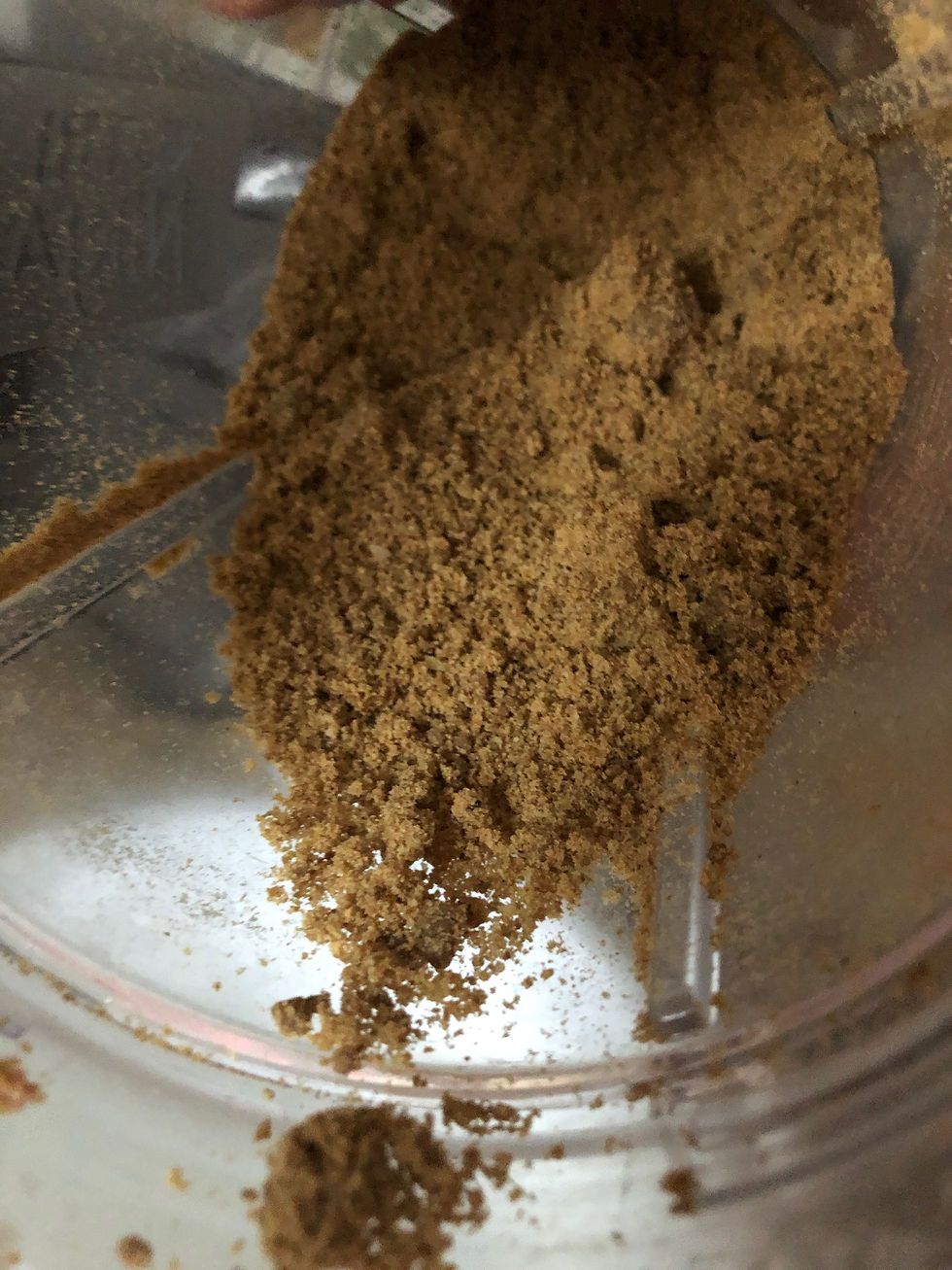
After blending, the kibble becomes a fine, sandy powder — almost like coarse flour. This is exactly what you want.
Step 3: Transfer the Powder to a Larger Container
Pour the blended kibble powder into a larger blender pitcher or mixing container. You'll need more room once you start adding the wet food and water. Give the powder a gentle shake to settle it.
Step 4: Add Warm Water and Wet Food
Now it's time to add the wet ingredients. Pour in warm water (enough to make the mixture pourable, usually about equal parts powder to liquid to start) and then add your canned wet food. For a full batch, we used one 630g can of Pedigree Meatloaf.
The warm water helps soften everything and makes the final gruel easier for young puppies to lap up. For very young pups just starting on solids (around 3–3.5 weeks), you can substitute puppy milk replacer for the water to add extra nutrition.

You can see the blender cup with the wet food and water added alongside the open can of Pedigree wet food.
Step 5: Blend Everything Together
Put the lid on securely and blend until smooth. You're looking for a consistency somewhere between a thick soup and a milkshake — pourable, but not watery. If it's too thick, add a little more warm water and blend again. If it's too thin, you can add more kibble powder.
Blend in short bursts and check the consistency between each pulse. The goal is a smooth, lump-free mixture that puppies can easily lap up from a shallow dish.

The blender cup at this stage shows all the ingredients coming together into a rich, dark brown mixture.
The Finished Gruel
Once blended, your puppy gruel should be smooth, creamy, and uniform in colour and texture. It will look a lot like a thick chocolate milkshake (definitely don't taste it though!). Pour it into a storage container with a lid. You can keep it in the fridge for up to 48 hours; just give it a good stir before each feeding, as it will settle.

The finished product, shown from above, has a smooth, thick, mousse-like texture. Perfect for little lapping tongues!
What About Puppy Mush? (The No-Blend Version)
If you don't have a blender handy, or if your puppies are a little older and ready for slightly more texture, you can make puppy mush instead. This is the same concept, but instead of blending, you soak the kibble in warm water until it softens.
To make puppy mush:
Place your dry kibble into a large Ziploc bag or bowl.
Pour in enough warm water to fully submerge all the kibble.
Seal the bag and let it soak for 30–60 minutes (or until the kibble has absorbed most of the water and become soft and swollen).
Once soaked, squeeze or mash the bag with your hands to break down the kibble further, or transfer to a bowl and mash with a fork.
Add a little wet food and stir to combine.
The soaking photo shows kibble in a Ziploc bag just after water is added — still quite solid. After the full soak, the kibble has swollen and softened considerably, making it easy to mash by hand.
The texture of puppy mush is chunkier than gruel, which is great for pups around 5–7 weeks who are getting more comfortable with solid food and need a little more to chew on.
Tips for Feeding Time
Start thin, go thicker gradually.
When puppies first start on gruel around 3 weeks, make it quite watery — closer to milk in consistency. Over the following weeks, thicken it up progressively as their digestive systems mature.
Warm it up.
Cold gruel straight from the fridge can upset tiny tummies. Let it come to room temperature or warm it slightly before serving.
Expect mess.
Puppies will walk in it, roll in it, and wear it as a face mask. Lay down a washable mat or puppy pads before feeding time and have a damp cloth ready for cleanup.
Shallow dishes only.
Use a flat, shallow dish or a pie plate so even the smallest pups can reach the food easily without risking falling face-first into a deep bowl.
Offer alongside milk.
Gruel doesn't replace nursing or bottle feeding right away — offer it as a supplement first, letting puppies explore and taste at their own pace.

Making puppy gruel might feel daunting the first time, but once you've done it, it becomes a quick part of your routine. The whole process takes under 10 minutes with a blender, and knowing you're helping tiny puppies take their first steps toward independent eating is incredibly rewarding. Whether you're a seasoned foster or brand new to raising neonates, this is one skill that will serve you (and your foster pups!) well. Happy feeding!
